Workplace Health and Safety
Confined Spaces Series – Part 1: Standards, Stats & More
Learn about confined spaces statistics and about the various confined spaces standards.
Discover how to classify a permit-required confined space and build a confined space program that addresses air testing and rescue planning.
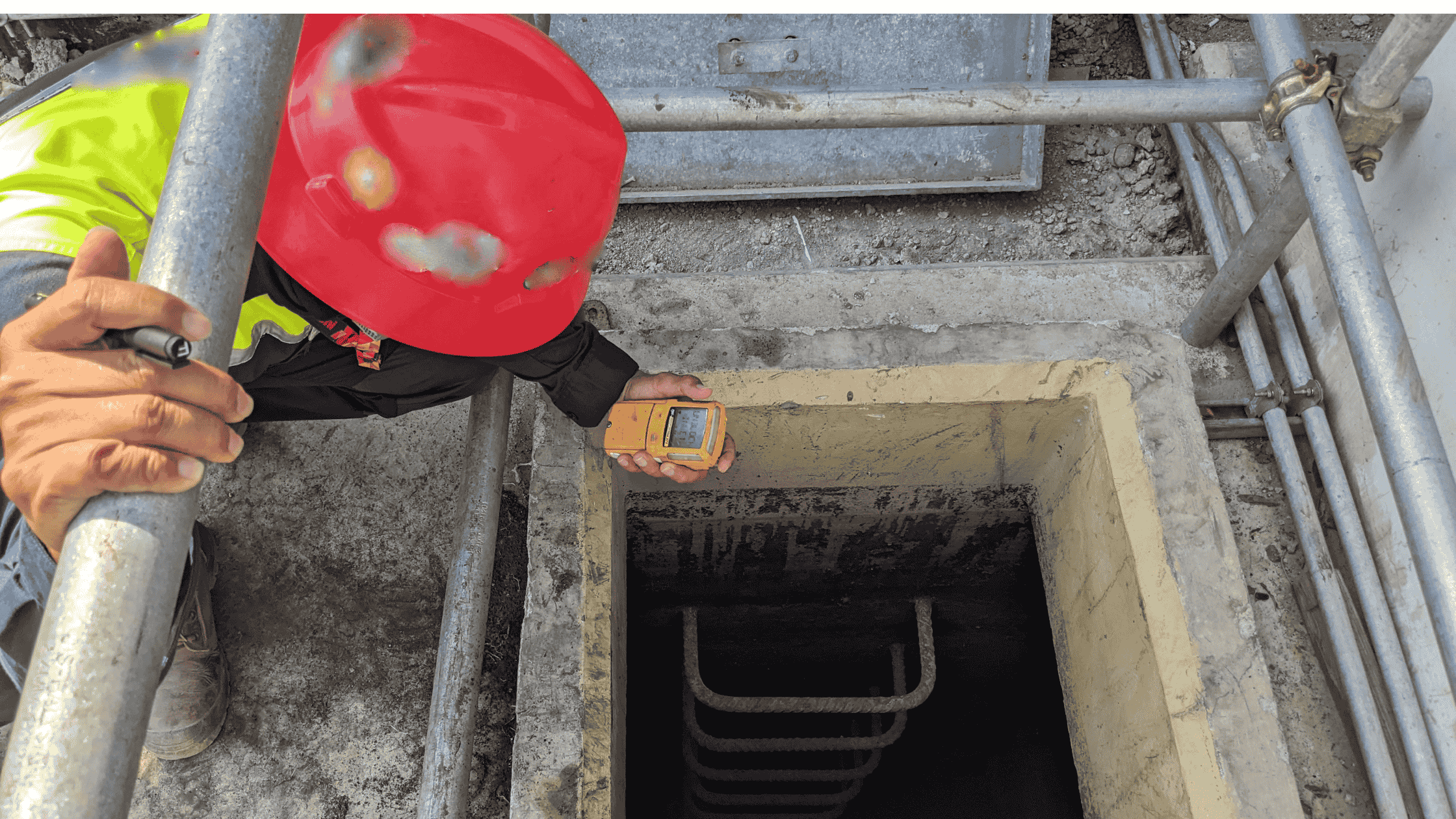
Confined space safety depends on correctly identifying a permit-required confined space, controlling hazards before entry, performing air testing, and following a rescue plan that does not create more victims. OSHA sets clear requirements under 29 CFR 1910.146 and different rules for construction and shipyards, so your confined space program must match the work being performed. When teams classify spaces properly, document their decisions, and execute permits as written, they reduce risk and improve compliance.
OSHA defines a confined space using three clear physical characteristics. The space must be large enough for a worker to enter and perform work, it must not be designed for continuous occupancy, and it must have limited or restricted means of entry or exit.
This definition focuses on structure, not on whether the space appears dangerous. A tank, pit, vault, or crawl space may look routine, yet if it meets these three conditions, OSHA considers it a confined space. That distinction matters because once a space fits the definition, specific safety obligations may apply.
Under 29 CFR 1910.146, “entry” occurs as soon as any part of a worker’s body breaks the plane of the opening. A worker does not need to fully climb inside. Even reaching an arm or leg into the space can meet the definition of entry under the rule.
A permit-required confined space takes this one step further. It is a confined space that has, or can have, a serious hazard such as a hazardous atmosphere, engulfment, or another condition that can trap or harm a worker. Employers must follow specific requirements to protect employees when those added hazards are present.
Once you understand these definitions, it becomes easier to see why certain hazards inside these spaces create such serious risks.
Confined spaces become dangerous because multiple hazards can build quickly inside an area that offers limited ways in or out. When conditions change, workers may have only seconds to react, and restricted access can delay escape or assistance. This combination of hidden risk and limited mobility makes small mistakes far more serious.
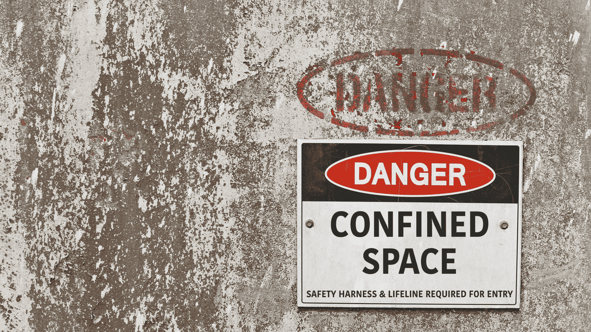
The data shows how severe the consequences can be. The Bureau of Labor Statistics reports that 1,030 workers died in confined-space incidents from 2011 to 2018, with annual totals ranging from 88 to 166. NIOSH also reports that more than 60 percent of confined space fatalities involve would-be rescuers, which highlights how fast a single emergency can escalate.
Two hazards demand close attention because teams often underestimate how quickly they can turn serious:
These risks rarely act alone. Inside a confined space, they combine with limited access and visibility, which is why careful evaluation and control are critical before anyone enters.
Because those hazards can turn serious fast, OSHA requires a structured program when a space meets the permit-required threshold.
When a space meets the permit-required threshold, OSHA expects more than a form filled out at the start of the shift. Employers must build a structured program that works consistently every time entry begins.
A compliant permit-required confined space program includes several core elements:
These elements work together as a system. When each role is clear, hazards are controlled, air is monitored, and rescue is planned in advance, the program becomes a consistent method for protecting workers inside permit-required confined spaces. Having clear requirements on paper is important, but putting them into practice every day is where many programs struggle.
EHS Insight is EHS management software built for safety teams who need their programs to work in the field and stand up under scrutiny. If confined space safety feels harder to manage than it should, the issue often is not knowledge. It is execution, documentation, and follow-through.
Paper permits get lost. Training gaps hide until an incident exposes them. Corrective actions stall after a near miss. EHS Insight closes those gaps by turning your confined space program into a connected, trackable system.
With EHS Insight, you can:
Confined space safety should protect workers and protect your organization. EHS Insight helps you do both with less manual work and more visibility. Ready to strengthen your confined space program? Schedule a live demo of EHS today.
OSHA requires employers to train entrants, attendants, and entry supervisors on their specific duties, hazards, and emergency procedures before they work in a permit-required confined space. Training must ensure each employee understands the hazards and can perform assigned roles safely under 29 CFR 1910.146.
Employers should review the confined space program whenever there is a change in work conditions, a new hazard, or after an incident or near miss. Regular reviews help ensure permits, air monitoring practices, and rescue procedures still reflect actual site conditions and current OSHA requirements.
Common OSHA citations include failure to test the atmosphere, incomplete or missing permits, lack of a trained attendant, and inadequate rescue planning. Many violations stem from poor documentation or not following the written permit program during actual entry operations.
On construction sites, controlling contractors and entry employers must share hazard information and coordinate entry operations under 29 CFR 1926 Subpart AA. Clear communication about hazards, permits, and rescue procedures helps prevent gaps that can lead to serious injuries.
The entry permit, atmospheric test results, hazard controls, and names of authorized entrants and attendants should remain available at the job site during entry. Keeping these records accessible supports real-time decision-making and demonstrates compliance during an OSHA inspection.

Learn about confined spaces statistics and about the various confined spaces standards.
Learn about what’s required to be in every confined space permit and how to keep the entire entry process organized.
Check out part two of our three-part series on confined spaces and learn all about the classification and reclassification processes.