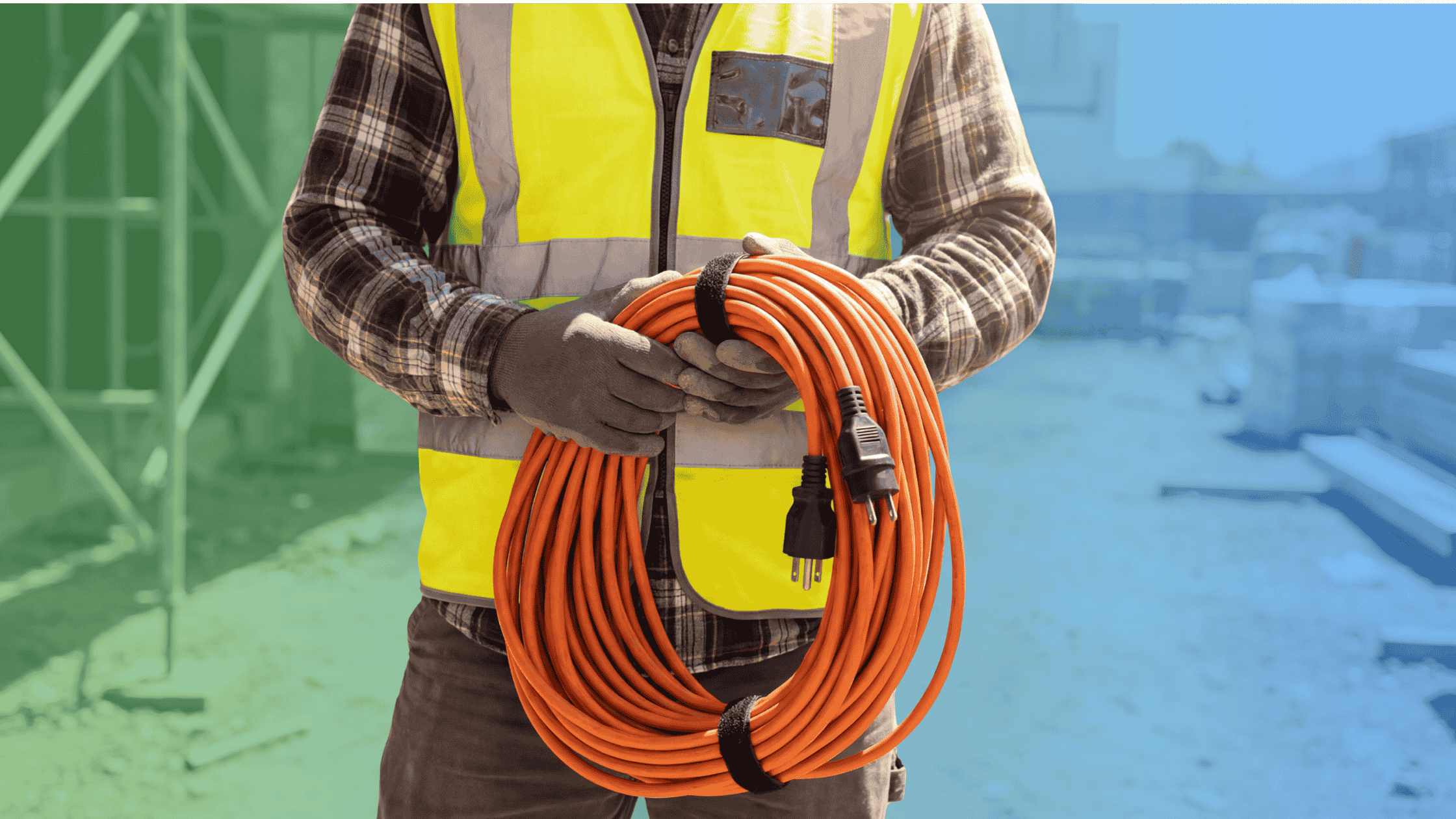
Outdoor and heavy-duty extension cords can become serious hazards when crews use the wrong cord, overlook damage, or expose cords to harsh job-site conditions.
OSHA requirements focus on proper cord construction, safe use, and removing damaged cords from service. Safety managers also need to prevent common issues like running cords through doorways or using them as permanent wiring. Consistent inspections and clear job-site controls help reduce shock risks and keep temporary power compliant.
What makes extension cords risky on job sites?
Outdoor work puts extension cords in environments that cause damage fast. Water, mud, sharp edges, vehicle traffic, and dropped tools can all wear down insulation or connectors in a short time. Many problems start small, a cut jacket, a missing ground pin, or a connector sitting in standing water.
Those minor issues often go unnoticed until they create a shock hazard or lead to an OSHA citation. At the same time, product labels can give crews a false sense of security. The phrase “heavy-duty” on a package does not determine OSHA compliance.
Safety managers must look beyond the label and focus on how the cord is built and where crews use it. On construction sites, OSHA 29 CFR 1926.405 sets clear requirements for extension cords used with portable tools. These cords must be three-wire cords designed for hard or extra-hard usage, built to handle the rough conditions common on job sites.
Once safety leaders understand how damage and misuse develop, the next step is recognizing the specific violations OSHA most often cites on job sites.
What are the most common OSHA extension cord violations?
Many OSHA extension cord violations are easy to see, which is what makes them so frustrating for safety managers. The problems often sit in plain view on job sites and shop floors, yet crews overlook them during daily work.
In practice, violations usually show up as small shortcuts that slowly become normal parts of the workspace. Safety managers should watch closely for these common warning signs:
- Extension cords powering workstations or equipment day after day
- Unprotected cords routed through doorways where doors can pinch the jacket
- Daisy-chained power strips or temporary taps
- Taped or spliced cord repairs with no approved repair method
- Missing or broken grounding pins
- Connectors sitting in rain, puddles, or wet ground
- Unprotected cords stretched across aisles where forklifts, lifts, or foot traffic can damage them
OSHA has reinforced this point through interpretation letters. In an interpretation on power strips, the agency explained that temporary power taps used only to create extra outlets count as a substitute for fixed wiring, which violates the standard.
Identifying these violations is important, but preventing them depends on catching problems early through consistent inspections.
How often should workers inspect extension cords, and what should they look for?
Workers should inspect extension cords before each shift and remove any damaged cords from service right away. This requirement comes directly from OSHA 29 CFR 1910.334(a)(2)(i), which states that cord-and-plug equipment must be visually inspected before use on any shift.
The same standard also requires that damaged electrical equipment be removed from service until it’s repaired or replaced. This rule exists for a simple reason. Minor cord damage can quickly turn into a shock hazard if workers continue using the equipment.
.jpeg?width=645&height=430&name=electricalcordinspection%20(1).jpeg)
A good inspection only takes a few moments, but it must happen consistently. Workers should check for visible damage that could affect insulation, grounding, or connector integrity.
Common issues to look for include:
- Cuts, cracks, or crushed sections along the cord jacket
- Exposed conductors or damaged insulation
- Missing or broken grounding pins
- Loose plugs or connectors
- Signs of heat damage or melted insulation
- Taped or poorly repaired sections
- Cords that are not rated for wet or harsh environments
When crews build this quick check into their normal routine, they catch problems early and keep damaged cords from circulating on the job site.
While inspections catch many problems, environmental conditions can introduce additional risks that require extra attention from safety managers.
How should safety managers handle wet locations and outdoor work?
Outdoor environments change the risk profile for extension cords almost immediately. Rain, washdown areas, damp concrete, mud, conductive metal surfaces, and standing water all increase the chance of shock or equipment failure.
Because of these conditions, cords must match the environment where crews use them. OSHA 29 CFR 1910.334(a)(4) states that flexible cords used in wet or highly conductive locations must be approved for those locations. The same rule also requires that workers’ hands not be wet when plugging or unplugging energized equipment.
Small setup decisions make a big difference outdoors. Keeping connectors elevated, routing cords away from traffic, and preventing contact with standing water can significantly reduce electrical hazards during daily operations.
Managing these conditions requires coordination, visibility, and follow-through across job sites, which is where digital safety management tools can make a difference.
How can EHS Insight help safety managers control extension cord risk?
EHS Insight provides cloud-based environmental, health, and safety management software that helps organizations track hazards, inspections, incidents, and corrective actions in one connected system. Instead of relying on scattered spreadsheets, paper checklists, or delayed reports, safety teams can manage electrical hazards and job-site risks in real time.
Safety managers can use EHS Insight for:
- Mobile inspections: Conduct field inspections for extension cords, connectors, GFCI protection, and temporary power setups using a mobile device, even in remote environments.
- Corrective action tracking: Assign and track fixes when damaged cords, missing ground pins, or unsafe setups appear on a job site.
- Incident and near-miss reporting: Capture electrical hazards early and identify recurring risks across crews, contractors, or locations.
- Training management: Document worker training on electrical safety, temporary power rules, and inspection practices.
- Data dashboards and analytics: Spot patterns in electrical hazards so safety leaders can address issues before they lead to injuries or OSHA citations.
Extension cord hazards rarely come from missing rules. They usually come from missed inspections, delayed follow-up, and poor visibility across job sites. EHS Insight helps close those gaps so safety teams can identify risks faster and respond before they escalate.
See how EHS Insight can strengthen your electrical safety program. Schedule a demo today and explore how the platform helps safety leaders manage inspections, corrective actions, and workplace hazards from one place.

FAQ
What type of extension cord is required for construction job sites?
Construction sites require three-wire extension cords designed for hard or extra-hard usage when powering portable tools. OSHA 29 CFR 1926.405 requires this construction because these cords can handle rough conditions, heavy use, and higher risk of physical damage on job sites.
When should an extension cord be removed from service?
An extension cord should be removed from service as soon as workers notice damage. OSHA requires damaged cord-and-plug equipment to be taken out of service until it is repaired or replaced. Common triggers include exposed wires, missing ground pins, crushed insulation, or loose connectors.
Why is running extension cords through doorways considered unsafe?
Running cords through doorways creates a pinch point that can damage insulation and internal wiring. Doors can crush or cut the cord jacket over time, which increases the risk of shock, fire, or equipment failure. OSHA requires cords to be protected from damage caused by doorways and other pinch points.
Do outdoor extension cords require special protection in wet environments?
Yes. Extension cords used in wet or highly conductive locations must be approved for those environments. OSHA also requires workers’ hands to be dry when plugging or unplugging energized equipment, and connectors should be kept elevated and protected from standing water.
What is one of the biggest causes of extension cord hazards on job sites?3
One of the most common causes is treating temporary power as permanent wiring. Extension cords often stay in place for weeks or months, powering equipment or workstations. This practice increases wear, creates trip hazards, and violates OSHA rules that prohibit using flexible cords as a substitute for fixed wiring.