Biological hazards require task-based controls, clear training, and solid records to protect workers and meet OSHA requirements. OSHA may enforce specific standards, such as Bloodborne Pathogens, or rely on the General Duty Clause when no single biohazard standard applies. Start by assessing risk by task, apply the hierarchy of controls to reduce exposure at the source, and document what you did so you can show proof when it matters.
What is a biological hazard in the workplace?
A biological agent is a bacteria, virus, fungus, or other microorganism, plus related toxins, that can cause illness. A biological hazard is the risk that work activities expose employees to that agent.
The key word is exposure. Employees can encounter biological agents through blood, airborne particles, contaminated water, damp materials, surfaces, or contact with animals or waste. The hazard is not just the organism itself. The hazard exists when job tasks create a path for that organism to enter the body.
You can spot risk by asking simple, practical questions. What touches the skin? What gets breathed in? What could enter through a cut or splash into the eyes? When you approach biological hazards this way, control decisions become clearer.
What does OSHA require for infectious and biological exposure risks?
OSHA regulates biological hazards through specific standards and broader legal duties. When a dedicated rule applies, employers must follow it. When no single standard covers the hazard, OSHA may enforce protections under the General Duty Clause along with related standards such as respiratory protection, Personal Protective Equipment, and sanitation.
Bloodborne Pathogens Standard
The most direct example is OSHA’s Bloodborne Pathogens standard. It applies to occupational exposure to blood or other potentially infectious materials and requires employers to implement:
- An exposure control plan
- Engineering controls
- Safe work practice
- PPE
- Employee training
Sharps controls receive special attention. OSHA requires contaminated needles and other contaminated sharps not be bent, recapped, or removed, with limited exceptions.
Needlestick and Sharps Recordkeeping
Compliance also includes documentation. Employers may need to:
- Record qualifying needlestick injuries on the OSHA 300 Log
- Maintain a sharps injury log under the Bloodborne Pathogens standard
These records show that incidents were identified and tracked.
Respiratory Protection Requirements
Airborne biological hazards fall under OSHA’s Respiratory Protection standard when respirator use is required. Employers must establish and maintain a written respiratory protection program that includes:
- Medical evaluations
- Fit testing
- Training
- Proper respirator selection
- Ongoing program oversight
Together, these requirements reinforce a clear expectation. Employers must identify exposure risks, implement protective measures that match the task, and maintain documentation that shows those controls are active and enforced.
How do you control biological hazards using the hierarchy of controls?
The hierarchy of controls helps employers reduce biological hazards by addressing exposure at the source. It gives safety leaders a clear way to choose controls that are more effective and defensible during inspections or audits. Instead of defaulting to PPE, this approach helps you justify why you selected certain safeguards and how they reduce risk.
Think of it as a step-by-step decision process based on effectiveness:
Step 1: Elimination
Elimination removes the hazard entirely.
In biological hazard scenarios, full elimination is not always possible, but it can occur in specific situations. If a contaminated material can be removed from the workplace, or if a high-risk process can be discontinued or redesigned to avoid exposure, the hazard no longer exists for that task.
When elimination works, it provides the highest level of protection because the exposure pathway is gone.
Step 2: Substitution
Substitution replaces a higher-risk material or device with a safer alternative.
For example, replacing conventional needles with safety-engineered sharps or needleless systems reduces the risk of needlestick injuries. Choosing materials or processes that are less likely to support biological growth can also reduce exposure potential.
Substitution lowers risk before work begins and reduces reliance on individual action.
Step 3: Engineering Controls
Engineering controls isolate people from the hazard.
Improve ventilation to reduce airborne biological contaminants. Use local exhaust or physical barriers to limit spread. Install clearly marked sharps containers at the point of use so contaminated items are disposed of immediately.
These controls work consistently across shifts and do not depend on memory or compliance alone.
Step 4: Administrative Controls
Administrative controls define how work must be performed.
Exposure control plans, written cleanup procedures, inspection schedules, and role-based training reduce variation in how tasks are completed. OSHA expects this documentation under standards such as Bloodborne Pathogens.
Administrative measures support stronger controls, but they do not replace them.
Step 5: Personal Protective Equipment (PPE)
Personal Protective Equipment is the final layer of protection.
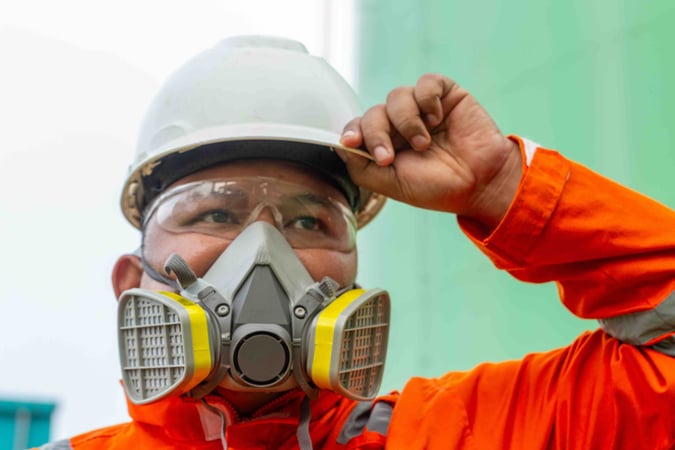
Gloves, gowns, and face protection reduce contact with blood and contaminated materials. Respirators protect against airborne biological hazards, but OSHA’s Respiratory Protection standard requires a written program, medical evaluations, fit testing, and training.
PPE protects the individual worker during exposure, but it is most effective when earlier controls have already reduced the overall risk.
How does EHS Insight help teams manage biological hazards at work?
EHS Insight is cloud-based EHS management software built to help safety leaders turn regulatory requirements into real, trackable action. Instead of juggling spreadsheets, shared drives, and email threads, your team manages biological hazard controls in one connected system.
Biological risks demand more than good intentions. They require proof. EHS Insight gives you that proof.
With EHS Insight, you can:
- Centralize your exposure control plans for Bloodborne Pathogens and link them directly to training, inspections, and incidents.
- Manage respiratory protection programs with documented fit testing, medical clearance tracking, and recurring task reminders.
- Track needlestick and sharps incidents with structured reporting, photo documentation, and OSHA-ready records.
- Schedule and verify inspections for water systems, ventilation checks, and sanitation tasks with clear ownership and due dates.
- Automate corrective actions so nothing falls through the cracks, with visible status updates and closeout evidence.
- Deliver role-based training and maintain completion records that stand up during audits.
- Use mobile tools in the field, even offline, so crews can report issues and complete tasks in real time.
If biological hazards are part of your operation, you need more than policies. You need proof. Schedule a demo of EHS Insight and see how your team can manage sharps injury follow-ups, respirator fit testing cycles, and inspection schedules in one connected system.
FAQ
What is included in an OSHA Bloodborne Pathogens exposure control plan?
An exposure control plan must identify jobs with exposure risk and explain how the employer will reduce that risk. It includes engineering controls, safe work practices, PPE, hepatitis B vaccination access, post-exposure steps, and annual review procedures under 29 CFR 1910.1030.
When does a needlestick injury have to be recorded on the OSHA 300 Log?
A needlestick injury must be recorded if it involves contaminated blood or other potentially infectious material and meets OSHA recordkeeping criteria in 29 CFR 1904.8. Employers may also keep a separate sharps injury log to meet Bloodborne Pathogens requirements.
When is a written respiratory protection program required?
A written program is required when an employer mandates respirator use to control airborne hazards. Under 29 CFR 1910.134, the program must include medical evaluations, fit testing, training, respirator selection, and ongoing oversight.
Does OSHA have a specific standard for Legionella or tuberculosis exposure?
OSHA does not have a dedicated standard for Legionella or tuberculosis. OSHA may enforce protections through the General Duty Clause and related standards such as respiratory protection and sanitation. Employers must assess risk and implement feasible controls.
How often must employees receive biohazard training?
Training frequency depends on the applicable standard. For Bloodborne Pathogens, training is required at initial assignment and at least annually. Respiratory protection training must occur before use and repeat when workplace conditions or equipment change.