Lockout/Tagout
Chemical Management Module
Centralize chemical and material information, inventory records, safety data sheet documentation, and reporting data in one platform. The EHS Insight Chemical Management Module gives EHS teams a clearer view of the materials managed across their organization, where inventory is maintained, and how chemical data supports day-to-day management and regulatory reporting.


CHEMICAL INVENTORY TRACKING
Track Chemical Inventory Across Your Organization
Maintain a current view of chemicals and materials using structured inventory records and transaction-based inventory tracking. Store key material and chemical information, review inventory by Business Entity or location, and retain history so teams can see how quantities change over time.
Key Capabilities
- Centralized Chemical and Material Records: Maintain CAS numbers, density, phase, composition, hazardous properties, and linked SDS information in structured records.
- Inventory by Location: Record which materials are present and the quantities managed at the applicable Business Entity or location.
- Inventory History and Transactions: Retain inventory history and, where configured, record purchase, usage, adjustment, or other inventory transactions instead of replacing the prior total.
- Composition Tracking: Connect materials to their chemical ingredients and composition data to support ingredient-level analysis and Tier II rollups.
- QR and Point-of-Use Workflows: Use QR-enabled templates and configured workflows to simplify recurring or point-of-use inventory activity where applicable.
SDS MANAGEMENT
Connect Chemical Inventory with Safety Data Sheets
Link material records with their associated SDS documents so chemical composition, hazardous properties, inventory information, and safety documentation can be managed together. Give employees and EHS teams faster access to the SDS information they need for workplace hazard communication, inspections, and emergency response.
Key Capabilities
- Linked SDS Records: Associate SDS documents with the corresponding material records.
- Search and Access: Use available SDS search and access tools to help employees locate safety information quickly.
- Mobile Availability: Access chemical and SDS information from supported mobile workflows when working away from a desktop.
- Centralized Hazard Information: Keep SDS documentation, hazardous properties, composition data, and inventory records connected to the same material record.
- Hazard Communication Support: Use centralized material and SDS information to support workplace Hazard Communication and Right-to-Know program activities.
Extend SDS capabilities with EHS Insight SDS Management. Organizations that need more robust SDS management can pair Chemical Management with the EHS Insight SDS Management Module and Managed Service for additional tools and support for maintaining, accessing, and managing their SDS library.
EPA TIER II REPORTING
Simplify Tier II Preparation and Review
Use the Chemical Inventory Tier II Log to bring together chemical composition, inventory quantities, and storage information used for EPCRA Section 312 Tier II preparation. Give EHS teams a consolidated view of reporting data before completing the applicable state or local submission process.
Key Capabilities
- Tier II Reporting Support: Review chemical inventory data used to support annual Tier II preparation.
- Composition Rollups: See which chemicals are contained in materials and how material inventory contributes to chemical totals.
- Storage and Quantity Information: Maintain inventory and storage data used during Tier II review.
- Centralized Reporting Data: Reduce the need to assemble reporting information from disconnected spreadsheets and systems.
- Review Before Filing: Use the Tier II Log to organize and review reporting data before completing the required external submission.

CHEMICAL REPORTING
Turn Chemical Data into Usable Reports
Use standard and customizable reports to review chemical, material, and inventory information across the organization. Reporting tools give EHS teams better visibility into inventory records, material details, chemical composition, and the data used for regulatory review.
Available Reporting
- Chemical Inventory Log: Review Chemical Inventory forms and their associated details.
- Chemical Inventory Log with Material Details: View inventory records together with related material information.
- Chemical Inventory Tier II Log: Review data used to support EPA Tier II preparation.
- Chemical Log: View chemicals and their associated details.
- Material Log: Review materials and their associated details.
- Customizable Reports: Enterprise customers can tailor reports to meet organizational reporting needs.
WASTE MANAGEMENT
Waste Management Integration
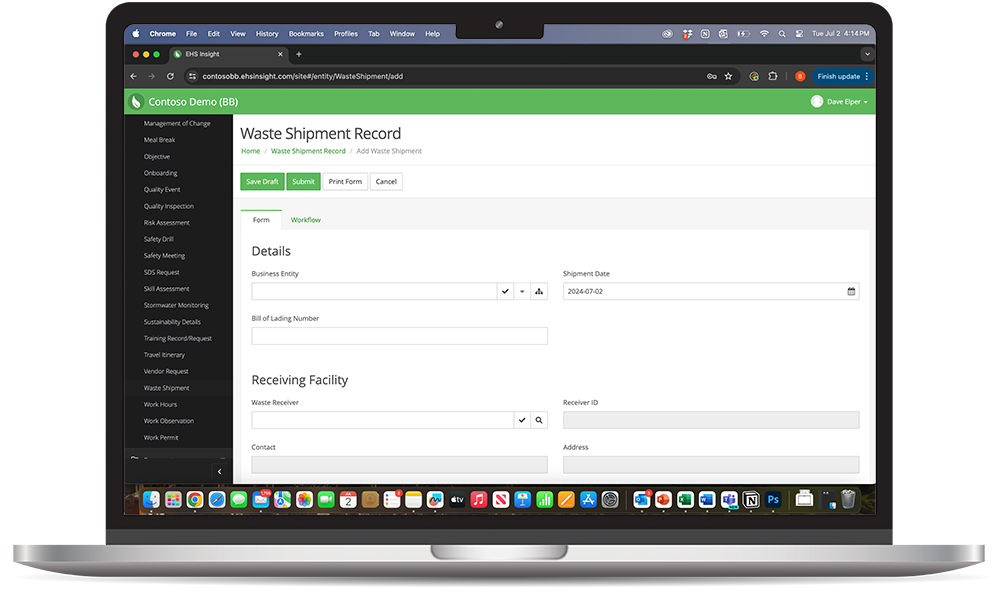
Chemical Management is designed to help you manage the chemicals and materials you have on site. When those materials become waste and need to be tracked through disposal, the separate EHS Insight Waste Management Module adds the tools needed to manage waste streams and shipments.
With Waste Management, teams can create and maintain waste stream records, document waste classifications and codes, track quantities and disposal costs, maintain transporter and receiving-facility information, and keep shipment records and supporting documents together. This gives EHS teams a clearer history of what waste was generated, where it was sent, and how it was handled.
For organizations using both modules, Chemical Management and Waste Management serve different purposes: one focuses on the materials being used and stored at the facility, while the other focuses on the waste streams and shipments created when those materials are no longer being used.
LABELING AND HAZARD COMMUNICATION
Support Hazard Communication with Centralized Chemical Data
Maintain hazardous properties, composition information, and linked SDS documentation alongside material records. Give EHS teams and employees easier access to the chemical information used to support workplace hazard communication and labeling processes.
Key Capabilities
- Hazardous Properties Records: Maintain hazardous-property information associated with materials.
- Composition Data: Record material composition and chemical ingredients in one place.
- SDS Access: Connect material records to the SDS documentation employees and EHS teams need.
- Labeling Support: Use available SDS and label functionality to support workplace container-labeling processes where configured.

AI-POWERED CHEMICAL INSIGHTS
Ask Questions Across Your Chemical Data
Use EHS Insight AI capabilities and the MCP Connector to query chemical, material, and inventory data in natural language. Quickly find locations, quantities, material composition, missing information, or inventory trends without building custom queries or exporting data to spreadsheets.
What AI-Powered Chemical Management Can Look Like
- Natural Language Queries: Ask questions such as “Show me all materials containing benzene” or “Which locations have Material X in inventory?”
- Inventory Summaries: Summarize chemical or material inventory information by Business Entity, location, or other available data fields.
- Data Quality Review: Identify missing information, such as material records without an SDS attachment, for follow-up by the appropriate user.
- Reporting Assistance: Use available platform data to create summaries and support internal analysis.

REGULATORY SUPPORT
Build a Stronger Foundation for Chemical Compliance
Chemical compliance involves dozens of overlapping federal, state, local, and international requirements. What applies depends on the substances you handle, where you operate, and how those substances are used. EHS Insight centralizes the chemical, material, inventory, and SDS data your team needs to manage those obligations more effectively.
How the Module Supports Regulatory Work
- EPCRA Tier II: Chemical inventory, composition, quantity, and storage data used to support annual Tier II preparation.
- OSHA Hazard Communication: Centralized material, hazardous-property, and SDS information used to support HazCom program administration.
- GHS-Aligned Hazard Information: Maintain hazardous properties and related material information used in hazard communication.
- Organization-Specific Reporting: Use standard and customizable reports to analyze chemical and inventory data for internal and regulatory review.

FREQUENTLY ASKED QUESTIONS
Chemical Management Module FAQs
What does the EHS Insight Chemical Management Module do?
The Chemical Management Module centralizes chemical and material records, chemical inventory, SDS-related information, inventory history, and reporting data. It helps EHS teams understand what materials are present across the organization and provides structured data used for internal oversight, hazard communication, and regulatory reporting activities such as Tier II preparation.
How does the module help with EPA Tier II reporting?
The Chemical Inventory Tier II Log brings together chemical composition, inventory quantity, and storage information used during EPCRA Section 312 Tier II preparation. EHS teams can review the consolidated data in EHS Insight before completing the applicable external filing process.
Does the module support SDS management?
Material records can be linked to SDS documents so inventory, composition, hazardous-property, and safety information are easier to manage together. Where the broader EHS Insight SDS capabilities are included, users can also take advantage of the SDS search and access functions available in their configuration.
What regulations does the Chemical Management Module support?
Chemical Management centralizes data that can support multiple chemical-management obligations, including EPCRA Tier II preparation and OSHA Hazard Communication activities. Because chemical requirements vary by substance, quantity, use, and jurisdiction, applicability and official regulatory submissions remain part of the organization's compliance process.
Can I access chemical data from the mobile app?
Supported mobile workflows can give users access to chemical, inventory, and SDS information when they are away from a desktop. Available functions depend on the user's configuration and permissions.
How does AI work with chemical management in EHS Insight?
EHS Insight AI capabilities and the MCP Connector can help users query chemical, material, and inventory information in natural language. Users can ask about material composition, locations, quantities, inventory history, or missing information and receive answers based on data available in the platform.
How does the Chemical Management Module connect to other EHS Insight modules?
Chemical and Material data can be reused across related EHS Insight workflows, including SDS and Waste Management, helping organizations maintain consistent substance information across the platform.
Our Latest Stories
Workplace Health and Safety
5 Minute Safety Topics
Oct 7, 2026
Release Notes
EHS Insight 26.13: Introducing Audit Programs
Oct 5, 2026