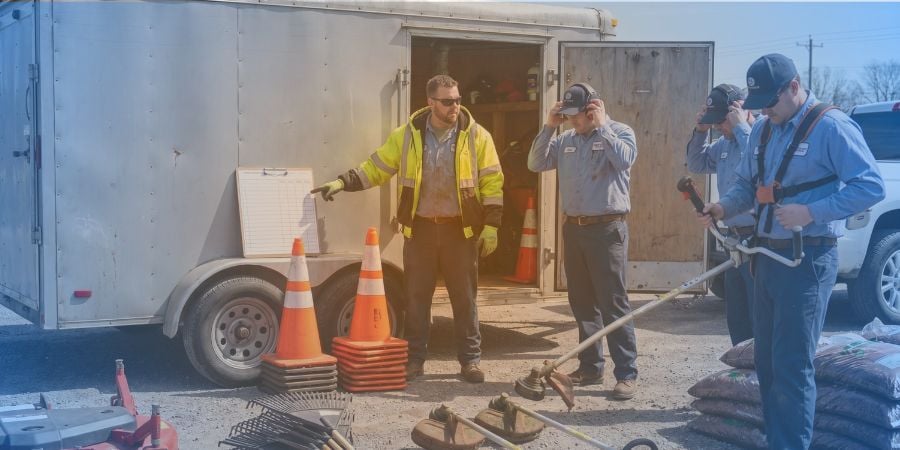
November brings shorter days, the first cold snaps, holiday travel and peak season for warehouse and retail teams. Each of those changes creates new hazards. The 10 topics below are built for 5 to 10 minute toolbox talks: a short reason it matters, the key points to cover and one question to get your crew talking.
1. Working and Driving in the Dark
Daylight saving time ends Sunday, Nov 1, 2026. Commutes and end-of-shift work suddenly happen in the dark.
- Check that yard, parking and walkway lighting works before the time change.
- Wear high-visibility clothing with reflective striping after dusk.
- Allow extra following distance; pedestrians are harder to see.
Ask: Where on our site is it hardest to see after 5 p.m.?
2. Deer and Wildlife on the Road
Fall is mating and migration season for deer, so collisions rise sharply in October through December, especially at dawn and dusk.
- Slow down in posted deer crossing areas and near wooded roads.
- Use high beams when there is no oncoming traffic.
- Brake firmly and stay in your lane; swerving causes more serious crashes.
Ask: Which routes our drivers use have the most wildlife?
3. Slips on Wet Leaves, Frost and Ice
Wet leaves are as slick as ice, and early frost forms on ramps, stairs and metal surfaces first.
- Clear leaves from walkways, stairs and loading docks daily.
- Stock ice melt and set up mats at entrances before the first freeze.
- Walk with short steps and keep hands free on stairs.
Ask: Where did we have slips last winter, and what changed?
4. Cold Stress
Hypothermia and frostbite can set in at temperatures well above freezing when wind and wet clothing are involved.
- Dress in layers and keep a dry set of gloves and socks on hand.
- Know the signs: shivering, numbness, slurred speech, pale or waxy skin.
- Schedule warm-up breaks and use a buddy system for outdoor work.
Ask: Who on our crew works outdoors longest, and do they have what they need?
5. Space Heaters and Carbon Monoxide
Portable heaters and fuel-burning equipment come out in November. Both raise the risk of fires and carbon monoxide exposure.
- Use only heaters approved for your space, with tip-over and auto shut-off.
- Keep heaters 3 feet from combustibles and never plug them into power strips.
- Never run generators, heaters or vehicles in enclosed spaces. Test CO detectors.
Ask: Where are space heaters being used on our site today?
6. Seasonal Hiring and New Worker Safety
Peak season brings temporary workers who do not know your hazards yet. New workers face higher injury risk in their first months on the job.
- Give every seasonal worker site-specific orientation before day one tasks.
- Pair new hires with an experienced buddy for their first week.
- Confirm they know how to report hazards and near misses.
Ask: What is one thing you wish you had known on your first day here?
7. Manual Handling During Peak Volume
Higher volume means more lifting, faster pace and more fatigue.
- Test the load before lifting and get help for anything awkward or over your limit.
- Keep loads close, lift with your legs and pivot your feet instead of twisting.
- Use carts, lift assists and team lifts; rushing is not worth an injury.
Ask: Which tasks feel most rushed when volume spikes?
8. Holiday Travel and Fatigue
Thanksgiving week (Nov 26, 2026) is one of the busiest travel periods of the year. Long drives after long shifts are a fatigue risk.
- Get a full night of sleep before long drives and take breaks every 2 hours.
- Never drive impaired. Plan a sober ride before celebrations start.
- Put phones in Do Not Disturb while driving.
Ask: How are you getting home safely after the holiday?
9. Kitchen and Potluck Safety
Office potlucks and break room cooking increase burns, cuts and foodborne illness. See our full Thanksgiving safety tips.
- Never leave cooking unattended. Never put water on a grease fire.
- Keep hot foods hot and refrigerate leftovers within 2 hours.
- Wear a cut-resistant glove when carving.
Ask: Who is responsible for putting food away after our event?
10. Quitting Tobacco: Great American Smokeout
The American Cancer Society's Great American Smokeout is Thursday, Nov 19, 2026. It is a natural moment to promote cessation resources.
- Share your company's cessation benefits and the national quitline (1-800-QUIT-NOW).
- Remind crews where designated smoking areas are and why they are located away from fuels and flammables.
- Encourage quitters to pick a buddy for support.
Ask: What would make it easier for someone here to quit?
Make Every Talk Count
A toolbox talk only helps if it is delivered and recorded. Rotate presenters, keep talks under 10 minutes and log attendance every time. For more ideas, see our 5-minute safety talk topics, winter safety topics and December toolbox talks.
Prove every talk happened. EHS Insight training management software records toolbox talk attendance from any phone and keeps it audit-ready. Request a free trial.